In many practices, the greatest friction does not arise during treatment, but before and between appointments: missing documents, callbacks because of forms, scattered document approvals and open questions shortly before an appointment. That is exactly where a good patient portal can take real pressure out of the process.
The decisive distinction
A portal is not a pretty digital mailbox. It is an operational surface for preparation, handoffs and documented communication.
1. Relief starts before the appointment
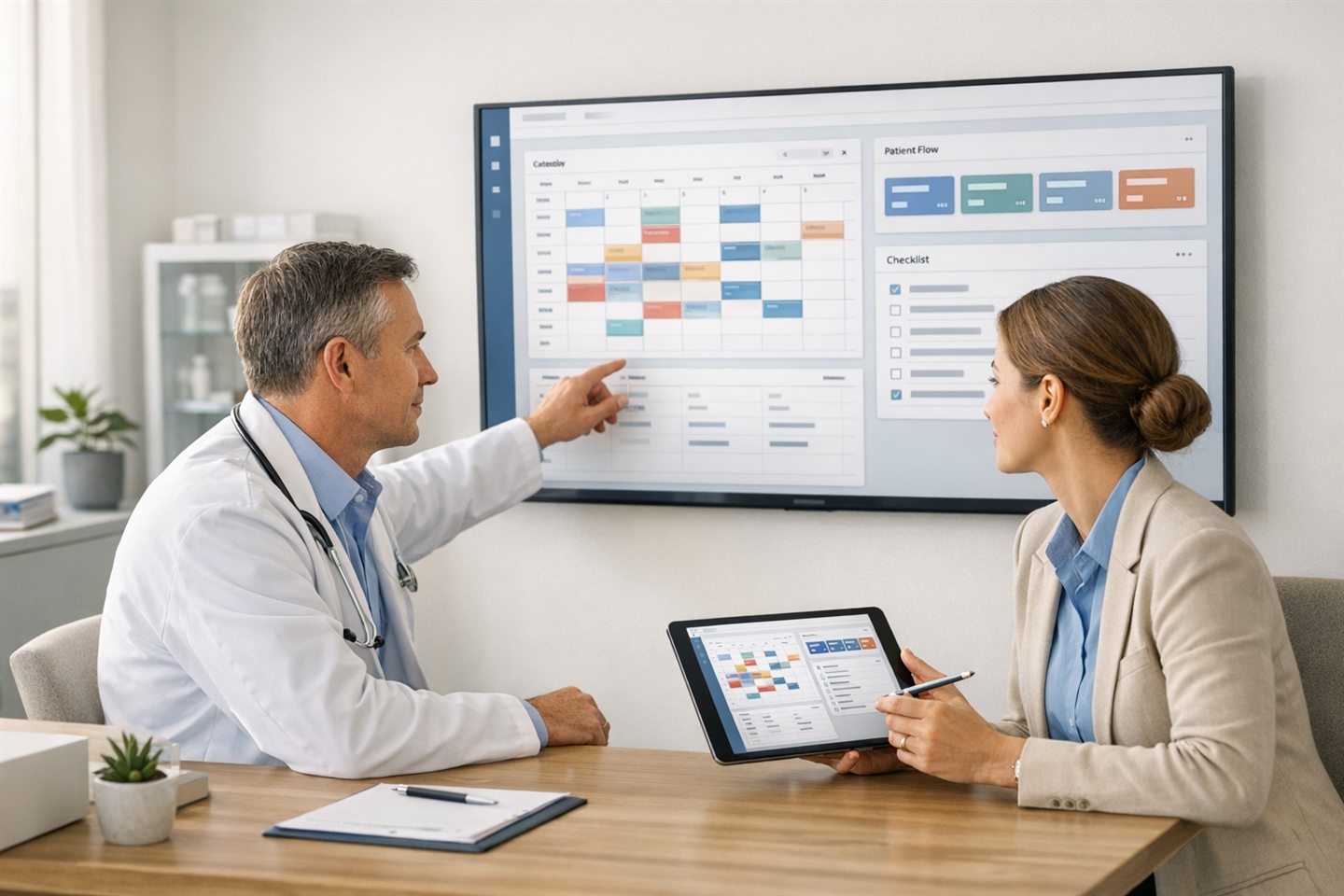
Portals are strongest when they become relevant before treatment rather than after. The largest leverage lies in preparation: requesting documents, showing information, providing forms and making open items visible before the team has to improvise inside a busy schedule.
That not only saves callbacks. It also reduces organizational stress for assistants and clinicians because essential information is available earlier, more completely and in a more structured form.
2. Good portals have clear case context
Many digital communication paths fail because of missing context. A document is sent, but later nobody knows for sure which appointment, preparation step or clarification it belonged to. A good portal keeps appointments, uploads, messages and approvals together in the same case space.
- Forms visibly relate to the specific treatment step.
- Uploads do not end up in a shared inbox, but on the correct case.
- Approvals remain traceable and temporally understandable.
- Open items are visible to the team without searching.
3. Not everything belongs in open communication channels
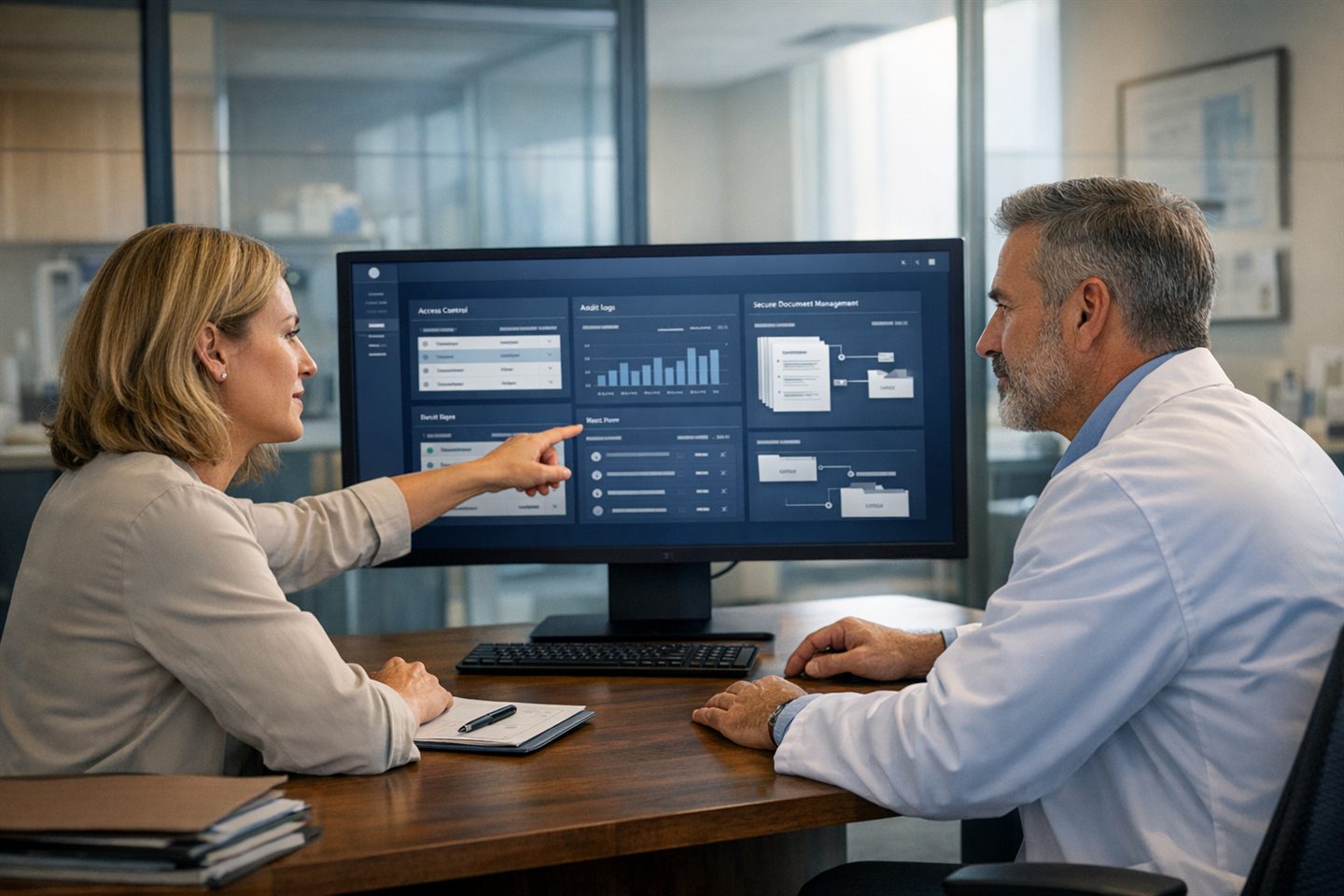
Especially in medical environments, there is a strong temptation to solve clarifications quickly by email or messenger. That may seem harmless for minor organizational information. For health data, documents, findings or approval-relevant content, however, a well-governed portal is clearly the better route.
This is not only true from a privacy perspective. It also protects the workflow itself. As soon as information is scattered across different channels, search effort, clarifications and misunderstandings increase.
4. Patients need clarity, not a digital hurdle
A portal will only be adopted when its value is immediately clear. The best portals do not speak in IT language, but in the logic of the visit: confirm an appointment, upload documents, fill out a form, view a document, answer a message.
That is not only better for the user experience. It also improves data quality because less is misassigned, sent twice or submitted incompletely.
5. Relief must become measurable internally
Whether a portal works can be seen through a few operational questions: Are there fewer callbacks? Are documents more often complete before the appointment? Are approvals completed faster? Are there fewer media breaks between front desk, clinician and follow-up work?
If the answers improve, the portal was not a design project, but a real process gain.
Fazit
A patient portal relieves pressure when it keeps preparation, uploads, approvals and communication within the same workflow. It does not replace a good team, but it very clearly reduces avoidable friction.